5401 Oswego St. Denver, CO 80239
 (877) 733 - LIFT


Artificial intelligence is reshaping industries at an incredible pace, and material handling is no exception. Warehouses, manufacturing facilities, and distribution centers are constantly looking for ways to move products more efficiently while keeping employees safe. Forklifts remain one of the most important pieces of equipment in these environments, but operating them also comes with challenges. From navigating tight warehouse aisles to transporting heavy loads, every task requires attention, skill, and a strong focus on safety.
This is where AI is beginning to make a noticeable impact. Rather than replacing forklift operators, artificial intelligence is becoming a valuable tool that supports smarter decision-making, improves visibility, and helps businesses identify potential hazards before they become costly incidents. By combining sensors, cameras, data analysis, and automation, AI-powered forklift technology is giving companies new ways to reduce downtime, improve productivity, and create safer workplaces.
Businesses of every size are starting to recognize that AI is more than just a trend. Whether operating a small warehouse or managing multiple distribution centers, investing in intelligent forklift technology can help streamline daily operations while providing valuable insights into equipment performance and operator behavior.
As AI continues to evolve, choosing the right equipment becomes even more important. Having access to modern forklifts from trusted manufacturers allows businesses to adopt new technologies without sacrificing reliability or performance.
Understanding AI in Modern Forklift Operations
Artificial intelligence in forklift operations refers to the use of advanced software, sensors, cameras, machine learning, and data analytics to assist operators and warehouse managers in making better decisions. Unlike traditional forklifts that simply perform lifting and transporting tasks, AI-assisted forklifts continuously collect information from their surroundings and analyze it in real time.
Many modern forklifts can detect nearby pedestrians, recognize obstacles, monitor operating conditions, and even recommend safer driving behaviors. Some systems communicate directly with warehouse management software, allowing inventory movement and equipment utilization to be tracked automatically.
One of the biggest misconceptions is that AI makes forklift operators unnecessary. In reality, today's technology is designed to support operators rather than replace them. Human judgment remains essential, especially when handling unusual loads, navigating complex warehouse layouts, or responding to unexpected situations.
Instead, AI acts like an intelligent assistant. It continuously monitors operating conditions and provides useful information that helps operators work more safely and efficiently.
Several industries are already benefiting from AI-powered forklifts, including:
- Warehousing and distribution
- Manufacturing facilities
- Retail fulfillment centers
- Cold storage operations
- Construction material suppliers
- Third-party logistics companies
- Ports and shipping terminals
As more companies embrace digital transformation, AI is becoming another tool that helps businesses stay competitive while improving overall operational performance.
How AI Improves Forklift Safety Monitoring
Safety has always been one of the biggest priorities in forklift operations. Even experienced operators can encounter unexpected hazards, especially in busy warehouses where pedestrians, machinery, and inventory are constantly moving.
Artificial intelligence significantly improves safety monitoring by continuously analyzing the work environment. Instead of relying solely on operator awareness, AI systems provide an additional layer of protection that helps reduce accidents before they occur.
One common feature is obstacle detection. Cameras, lidar, radar, and proximity sensors allow forklifts to identify nearby objects in real time. When the system detects a potential collision, it can alert the operator immediately. Some advanced models can even reduce travel speed automatically or stop the forklift if necessary.
Pedestrian detection has also become increasingly valuable. Warehouses often have employees walking through shared spaces while forklifts are transporting heavy loads. AI systems can recognize people entering hazardous areas and issue visual or audible warnings before an accident occurs.
Another major advantage involves monitoring operator behavior.
Instead of simply recording accidents after they happen, AI continuously evaluates how forklifts are being operated. The system can identify behaviors such as:
- Excessive speeding
- Sudden braking
- Aggressive turning
- Unsafe reversing
- Hard impacts
- Improper load handling
Managers receive reports showing where unsafe habits occur most frequently, allowing additional coaching before minor issues become serious accidents.
AI also helps enforce speed limits throughout different warehouse zones. Areas with heavy pedestrian traffic or narrow aisles may automatically trigger reduced operating speeds, minimizing collision risks without requiring constant supervision.
Blind corners present another challenge in many facilities. AI-assisted cameras and sensors can detect approaching equipment from the opposite direction, giving operators advance warning before entering intersections with limited visibility.
Rather than replacing existing safety protocols, AI strengthens them by providing continuous monitoring that human supervisors simply cannot achieve around the clock.
AI-Powered Fleet Management and Operational Efficiency
Forklift management becomes increasingly complicated as businesses expand. A warehouse operating just a few forklifts may be easy to monitor manually, but facilities with dozens or even hundreds of machines require much more visibility into daily operations.
Artificial intelligence helps transform fleet management from guesswork into data-driven decision-making.
Instead of wondering how equipment is being used, managers receive detailed performance insights generated throughout every shift.
AI can monitor:
- Equipment utilization rates
- Idle time
- Travel distances
- Battery performance
- Fuel consumption
- Operating hours
- Average task completion times
- Congestion within warehouse traffic routes
This information allows businesses to identify inefficiencies that might otherwise go unnoticed.
For example, data may reveal that several forklifts remain idle during certain shifts while others are consistently overloaded with work. Managers can rebalance assignments to maximize equipment usage without purchasing additional machines.
Route optimization is another growing application for AI.
Rather than allowing operators to choose travel paths independently, AI systems can recommend more efficient routes based on warehouse activity, inventory locations, and current traffic conditions. Shorter travel distances reduce fuel or battery usage while increasing the number of completed tasks per shift.54
Warehouse congestion is another hidden productivity challenge. AI identifies traffic bottlenecks where forklifts frequently slow down or wait for other vehicles to pass. Managers can then redesign workflows or storage layouts to improve movement throughout the facility.
Operational data also improves long-term planning.
Instead of making purchasing decisions based on estimates, companies can evaluate actual equipment demand. This helps determine whether additional forklifts are necessary or whether existing assets can simply be deployed more efficiently.
Artificial intelligence also contributes to better scheduling by identifying peak workload periods throughout the day or week. Managers can assign operators and equipment more effectively, reducing delays while improving customer service.
These improvements may seem small individually, but together they can produce significant gains in warehouse productivity while reducing operating costs over time.
Predictive Maintenance with Artificial Intelligence
Unexpected forklift breakdowns can disrupt an entire warehouse operation. A single machine taken out of service may delay shipments, slow production, increase labor costs, and create unnecessary stress for operators and managers alike. Traditional maintenance schedules help reduce these risks, but they often rely on fixed service intervals that don't always reflect how the equipment is actually being used.
Artificial intelligence changes this approach by introducing predictive maintenance. Instead of waiting for a component to fail or replacing parts on a set schedule, AI continuously monitors the condition of the forklift and identifies patterns that may indicate developing mechanical issues.
Modern forklifts equipped with sensors collect thousands of data points during daily operation. AI analyzes information such as:
- Engine performance
- Battery health
- Hydraulic pressure
- Motor temperature
- Brake performance
- Tire condition
- Mast operation
- Steering response
- Vibration levels
- Operating hours
Rather than simply storing this information, AI compares it against expected performance and historical data. If the system detects unusual changes, it alerts maintenance teams before a small issue becomes a costly repair.
For example, an increase in hydraulic pressure could indicate a developing leak or blockage. A rise in motor temperature may signal excessive strain or worn components. Changes in battery charging behavior can reveal declining battery health before performance begins affecting productivity.
This proactive approach offers several advantages.
First, businesses experience less unplanned downtime. Repairs can be scheduled during off-hours instead of interrupting daily operations.
Second, maintenance costs become more predictable. Catching minor problems early is usually far less expensive than replacing major components after a failure.
Third, forklifts stay in service longer. Consistent maintenance based on actual equipment condition helps extend the lifespan of expensive assets while maintaining reliable performance.
Predictive maintenance also improves workplace safety. Mechanical failures involving brakes, steering systems, lifting mechanisms, or hydraulics can create dangerous situations for operators and nearby employees. AI helps reduce these risks by identifying warning signs before equipment reaches unsafe operating conditions.
Fleet managers also gain access to maintenance history and performance trends across every machine. Instead of relying solely on technician observations, they can make repair and replacement decisions based on objective data.
As warehouses become more connected, predictive maintenance is quickly becoming one of the most valuable applications of artificial intelligence in material handling.
Enhancing Operator Performance Through AI
Every forklift operator brings a different level of experience, confidence, and skill to the job. Even highly trained professionals can develop habits that reduce efficiency or increase safety risks over time. Artificial intelligence provides an opportunity to improve operator performance through continuous feedback rather than relying only on occasional evaluations or annual training sessions.
One of AI's greatest strengths is its ability to observe driving patterns without interruption.
Instead of simply recording incidents after they occur, AI monitors everyday operating behaviors such as:
- Turning speed
- Braking habits
- Acceleration patterns
- Load handling techniques
- Travel routes
- Parking accuracy
- Reverse driving practices
- Seatbelt compliance
- Impact events
This information helps identify trends that might otherwise go unnoticed.
For instance, an operator may consistently brake too hard while transporting heavy loads. Another may drive slightly faster than recommended in low-traffic areas. Individually, these actions might seem minor, but over time they contribute to increased wear on equipment and greater safety risks.
Rather than using this data to punish employees, many companies use it as a coaching tool.
Managers can provide personalized training based on real operating data instead of generalized safety reminders. Operators receive practical feedback that helps them improve efficiency while reducing unnecessary risks.
AI also supports new employee training.
New operators often require time to become comfortable navigating warehouse layouts and handling different load types. AI-assisted guidance systems can provide alerts, reminders, and recommendations that reinforce proper operating procedures during the learning process.
Some intelligent systems even recognize signs of operator fatigue.
Long shifts, repetitive tasks, and demanding work environments can affect concentration. AI may identify slower reaction times, inconsistent steering, or unusual operating behaviors that suggest an operator should take a break before fatigue contributes to an accident.
Performance reporting also creates opportunities for positive recognition.
Rather than focusing only on mistakes, companies can acknowledge operators who consistently demonstrate safe driving habits, efficient equipment usage, and excellent productivity. Recognition programs supported by AI-generated data often encourage healthy competition while reinforcing a strong safety culture.
The goal is not to replace human supervisors but to provide better information that helps employees succeed. When operators receive ongoing feedback supported by objective data, both confidence and performance tend to improve over time.
Integrating AI with Warehouse Management Systems
Artificial intelligence becomes even more powerful when it works alongside warehouse management systems (WMS). Instead of treating forklifts as independent pieces of equipment, businesses can connect them to broader warehouse operations, creating a more coordinated and efficient workflow.
Warehouse management systems already help organize inventory, monitor stock levels, process customer orders, and assign picking tasks. AI adds another layer of intelligence by allowing forklifts to communicate with these systems in real time.
For example, as soon as a new order enters the system, AI can recommend the most efficient forklift for the task based on its current location, battery level, workload, and availability.
This reduces unnecessary travel while improving order fulfillment speed.
Inventory movement also becomes more accurate.
Instead of manually recording every product transfer, connected forklifts automatically update warehouse records as pallets are moved between storage locations. This reduces paperwork while minimizing inventory discrepancies.
AI can also identify traffic patterns throughout the warehouse.
If several forklifts regularly converge in the same aisle during peak hours, the system may recommend alternate travel routes or revised task assignments to reduce congestion. These adjustments help maintain smoother operations without requiring major facility changes.
Another advantage is real-time visibility.
Managers no longer need to wait until the end of the shift to understand warehouse performance. AI dashboards provide live information about:
- Active forklifts
- Completed tasks
- Equipment availability
- Inventory movement
- Order progress
- Operator productivity
- Battery charging status
- Maintenance alerts
Having access to this information allows supervisors to make faster decisions whenever priorities change during the day.
Artificial intelligence also improves forecasting.
By analyzing historical warehouse activity alongside current operational data, AI can predict future equipment demand, seasonal workload increases, and staffing requirements. Businesses can prepare for busy periods before they arrive rather than reacting after bottlenecks develop.
As more warehouses embrace automation, integration between forklifts, warehouse software, and AI will continue becoming increasingly valuable. The result is a more connected operation where equipment, employees, and inventory work together more efficiently than ever before.
Challenges Businesses Should Consider Before Adopting AI
Artificial intelligence offers significant benefits, but adopting AI-powered forklifts requires thoughtful planning. Businesses should consider their operational needs, budget, and long-term goals before investing.
While AI-enabled forklifts may have higher upfront costs, they can deliver long-term value through improved productivity, enhanced safety, and reduced maintenance. Employee training is also essential so operators and managers can confidently use AI features and respond to system insights.
Companies should ensure new technology is compatible with their existing equipment and warehouse management systems while prioritizing data security for connected devices. It's also wise to choose scalable solutions that can grow alongside the business.
Most importantly, AI should not replace strong warehouse practices. Safe operating procedures, routine maintenance, and proper operator training remain the foundation of efficient and safe forklift operations.
Choosing the Right AI-Ready Forklift Equipment
Selecting the right forklift has always been an important business decision, and the growing role of artificial intelligence makes that choice even more significant. Companies should consider both their current operational needs and how technology may support future growth.
The first step is identifying the type of work the forklift will perform. Warehouses with narrow aisles may benefit from reach trucks designed to maximize vertical storage space. Businesses focused on order fulfillment often rely on order pickers to improve efficiency during inventory retrieval. Facilities handling heavy palletized loads may prefer durable counterbalance forklifts, while pallet jacks remain ideal for moving materials over shorter distances.
Once the equipment type has been identified, businesses should evaluate the available technology features. Depending on operational requirements, AI-ready forklifts may include:
- Advanced obstacle detection systems
- Pedestrian recognition technology
- Collision avoidance assistance
- Intelligent speed management
- Fleet utilization monitoring
- Predictive maintenance capabilities
- Battery health monitoring
- Real-time telematics
- Integrated fleet reporting
- Warehouse management system compatibility
Not every business needs every AI feature, making it important to work with an experienced forklift supplier who can recommend equipment that fits your operational needs and budget.
Reliability should always come first. While AI enhances performance and safety, durable construction, quality components, and trusted manufacturer support remain essential for long-term productivity.
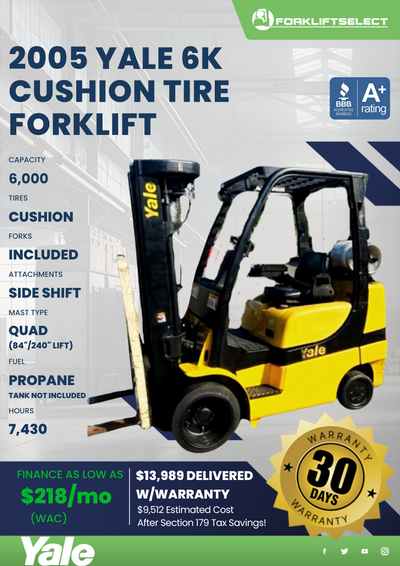
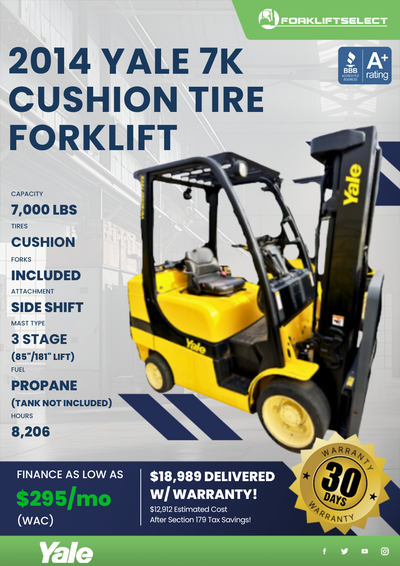
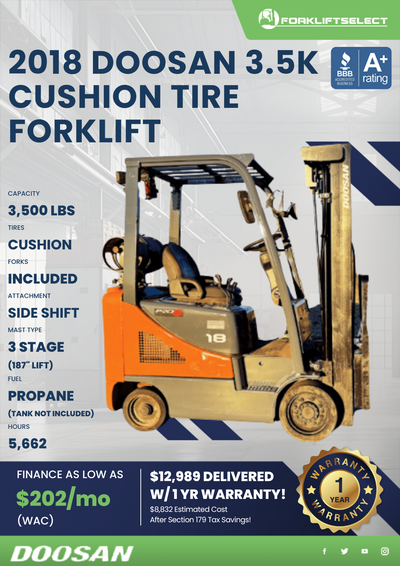
Forklift Select offers a wide selection of new and used forklifts from leading brands, including reach trucks, order pickers, pallet jacks, and counterbalance forklifts. With a broad inventory to choose from, businesses can find equipment that meets their current demands while supporting future technological advancements.
Conclusion
Artificial intelligence is transforming forklift operations in ways that were difficult to imagine just a few years ago. From real-time safety monitoring and predictive maintenance to intelligent fleet management and operator performance analysis, AI is helping businesses build warehouses that are safer, more efficient, and better prepared for future demands.
While technology continues to advance, successful forklift operations will always depend on the combination of skilled operators, reliable equipment, proactive maintenance, and strong safety practices. AI simply adds another layer of insight that allows businesses to make smarter decisions based on accurate, real-time information.
Companies that begin exploring AI-powered forklift solutions today are positioning themselves to improve productivity, reduce operating costs, minimize downtime, and strengthen workplace safety over the long term. Even organizations that are not ready for full automation can benefit from adopting equipment with intelligent features that support gradual digital transformation.
Forklift Select offers an extensive inventory of new and used forklifts from many of the industry's leading brands, making it easier to find equipment that aligns with your operational goals. From reach trucks and order pickers to pallet jacks and counterbalance forklifts, there are solutions available for warehouses, manufacturing facilities, distribution centers, and growing businesses of every size.
Whether you're upgrading your current fleet or planning for future expansion, the right equipment can make a measurable difference in safety, efficiency, and day-to-day performance. Contact Forklift Select today to explore available forklift options and discover reliable solutions designed to support your business now and well into the future.
 Back to blog